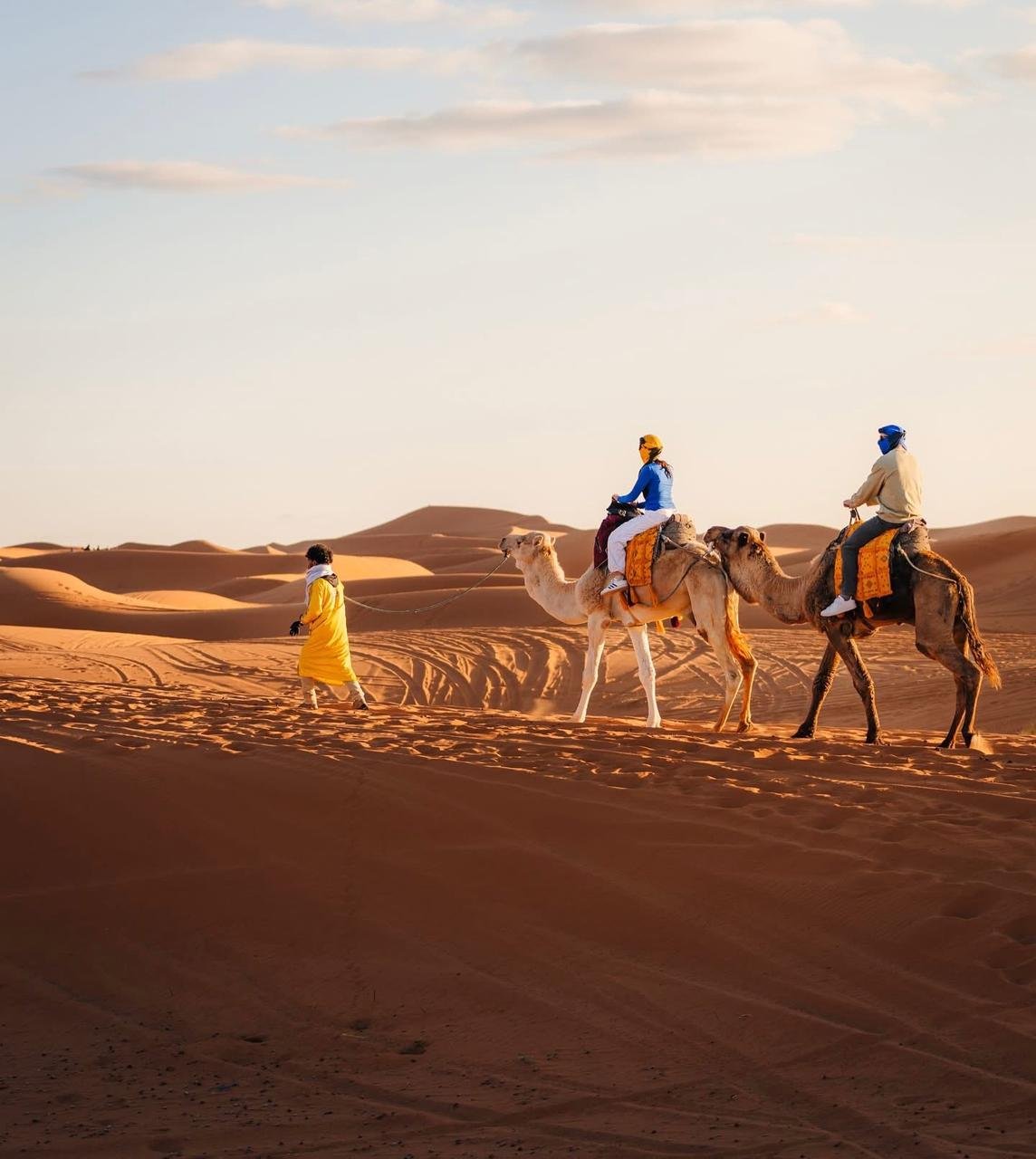
The Sahara is the highlight of most trips to Morocco, but the desert can feel very different depending on when you go. In summer the sand can pass 45°C at midday, while on a clear January night the temperature in the dunes can drop close to freezing. As local guides who drive the road from Marrakech to Merzouga and Zagora every week, here is our honest, month-by-month advice on when to visit the Moroccan Sahara.
Quick answer: the best months
The best time to visit the Sahara Desert in Morocco is from mid-September to November and from March to early May. Days are warm and sunny (22–30°C), nights are cool and comfortable in the camp, and the light on the dunes of Erg Chebbi is spectacular at sunrise and sunset.
Spring (March – May)
Spring is our favourite season. The oases of the Draa and Todra valleys are green, almond and apple trees bloom in the High Atlas, and the desert is pleasant from morning to evening. March and April can bring occasional sandstorms (chergui winds), usually lasting a few hours. Easter holidays are busy, so book camps and riads early.
- Day temperature in Merzouga: 24–32°C
- Night temperature: 10–17°C
- Ideal for: camel treks, quad biking, photography, families
Summer (June – August)
Summer is hot. Midday temperatures in the dunes regularly exceed 40°C, so activities are planned early in the morning and after 5 pm. The advantage: fewer tourists, lower prices and warm, magical nights sleeping under the stars. If you travel in summer, choose a camp with air-conditioned tents, drink plenty of water and wear a light scarf (cheche) to protect your head.
- Day temperature: 38–46°C
- Night temperature: 24–30°C
- Ideal for: travellers on a budget who don’t mind heat, stargazing
Autumn (September – November)
From the second half of September the heat breaks and the desert becomes perfect again. October is probably the single best month: warm days, mild nights, clear skies and date harvest season in the palm groves of Erfoud and Zagora. November is cooler at night, so bring a warm layer for the evening around the campfire.
- Day temperature: 22–32°C
- Night temperature: 8–18°C
- Ideal for: everyone – the most comfortable season
Winter (December – February)
Winter in the Sahara surprises many visitors. Days are sunny and pleasant (16–20°C), but after sunset the temperature falls fast and can reach 0–3°C. Good desert camps provide thick blankets and heating, and the starry sky is at its clearest. The High Atlas passes (Tizi n’Tichka) can occasionally close for a few hours after snow, which adds a beautiful snowy view on the way. Christmas and New Year are very popular, so book at least a month in advance.
- Day temperature: 15–21°C
- Night temperature: 0–7°C
- Ideal for: New Year in the desert, clear night skies
Ramadan and holidays
During Ramadan, tours run normally. Some small restaurants on the road close during the day, but your guide will always know where to stop for lunch. Many travellers enjoy sharing an iftar meal (breaking the fast at sunset) with local families – a memorable cultural experience.
Merzouga or Zagora – does the season matter?
Both deserts follow the same seasons. Merzouga (Erg Chebbi) has the high golden dunes up to 150 m and needs at least 3 days from Marrakech. Zagora is closer (2 days) with smaller dunes. Read our comparison in Merzouga vs Zagora to choose the right one.
Tips for any season
- Bring sunglasses, sunscreen and a scarf all year round.
- Pack a warm fleece – even in autumn and spring evenings can be cool.
- Book a private tour so you can adapt departure times to the heat.
- Stay at least one night in the dunes: sunset and sunrise are the magic moments.
Plan your desert trip
Ready to see the dunes? Our most popular itineraries are the 3-day desert tour from Marrakech to Merzouga, the shorter 2-day Zagora desert trip and the 3-day tour from Marrakech to Fes via the Sahara. Contact us on WhatsApp at +212 606-957514 and we will suggest the best dates for your trip.