Sleeping in the dunes is the moment most travellers remember for the rest of their lives. But what really happens in a Sahara desert camp? Is it comfortable? Is there a toilet? What do you eat? Here is a complete, honest description of a night in a desert camp in Merzouga or Zagora.
Arrival and the camel ride
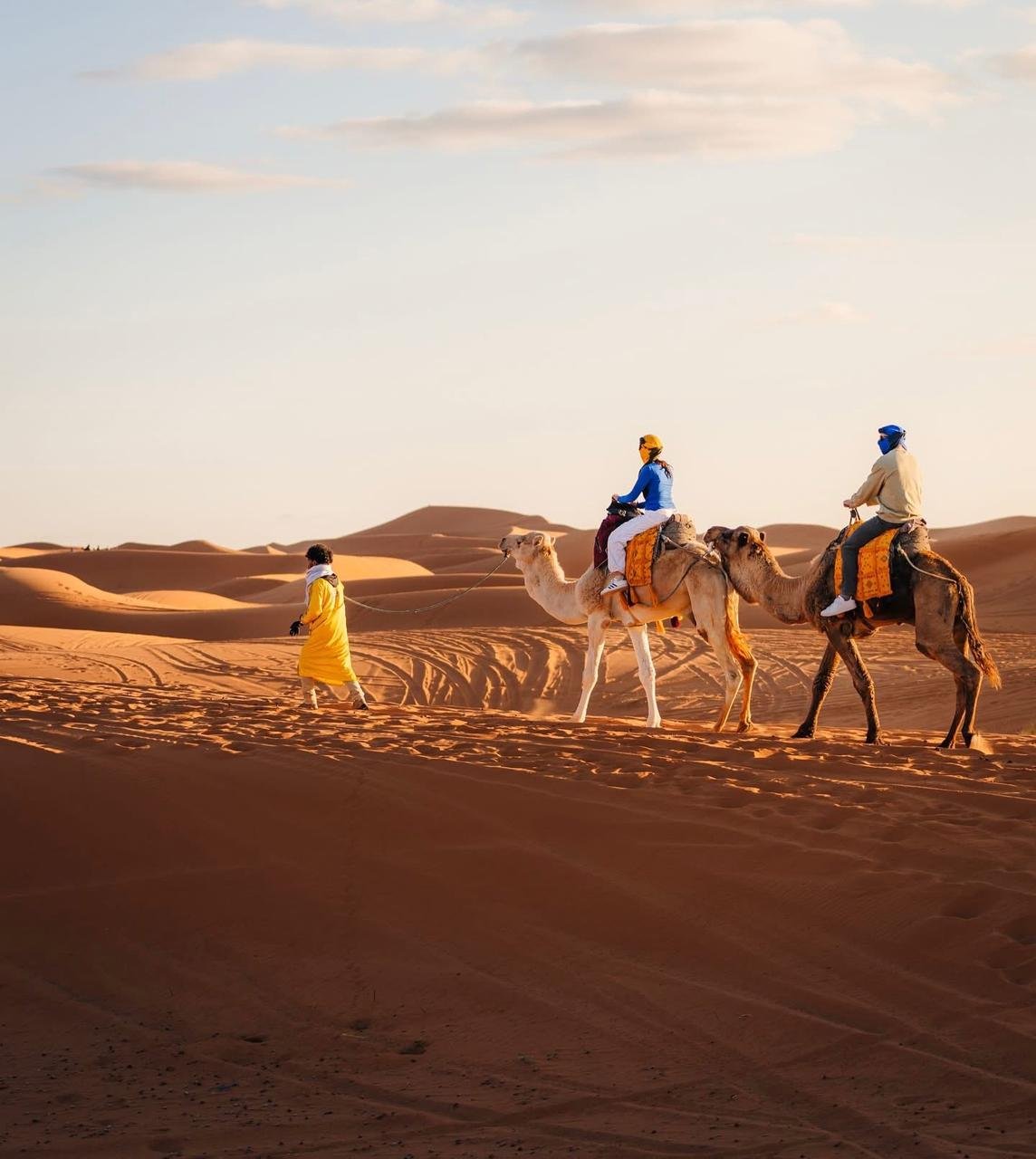
After a day of driving through the Atlas and the gorges, you arrive at the edge of the dunes in the late afternoon. Your main luggage stays safely in the hotel or vehicle; you take a small backpack. Camels are waiting with their Berber cameleers, and the ride to the camp takes about 1 to 1.5 hours. The caravan stops on a high dune so you can watch the sunset – the sand turns orange, then red, then purple.
Not comfortable on a camel? You can also reach most camps by 4×4 or on foot.
Types of desert camps
Standard camp
Traditional Berber tents made of wool or canvas, with simple beds, blankets and shared toilets and showers. Authentic and affordable.
Comfort camp
Larger tents with proper beds, and often a private bathroom with shower and toilet inside the tent. This is the option most of our guests choose.
Luxury camp
Spacious tents with king-size beds, en-suite bathrooms with hot water, electricity, heating in winter or air-conditioning in summer, and sometimes a lounge area. Perfect for honeymoons and special occasions.
Dinner under the stars
Dinner is usually served around 8 pm, in a dining tent or outside on carpets. A typical menu includes:
- Harira or vegetable soup
- Moroccan salads
- Chicken or lamb tagine cooked slowly over charcoal
- Seasonal fruit
- Endless mint tea
Vegetarian and other dietary needs are no problem if you tell us in advance. Alcohol is generally not served in camps.
Music around the fire
After dinner, the camp team lights a fire and plays traditional Berber and Gnawa music with drums (bendir) and qraqeb. Guests are always invited to join in. Then the fire dies down and the real show begins: without light pollution, the Milky Way is clearly visible, and shooting stars are common.
Sleeping
Camps provide beds, clean sheets and thick blankets. Nights can be cold from November to March, so wear warm clothes. In summer, many guests pull their mattress outside to sleep under the stars. It is very quiet – the only sound is the wind.
Toilets and showers
Almost all camps now have flush toilets and showers, shared or private depending on the camp category. Water is carried in by truck, so please use it carefully.
Sunrise and breakfast
Your guide will wake you up early (around 6–7 am depending on the season) to climb a dune and watch the sunrise – often even more beautiful than the sunset. Then you ride back on the camel, have breakfast and a hot shower at the hotel, and continue your trip.
Is it safe?
Yes. Desert camps are run by local families who know the dunes perfectly, and the Merzouga area is very safe for visitors. Our camps are located within reach of the village and staff stay with you all night.
Practical tips
- Bring a head torch and a power bank.
- Keep your phone and camera in a zip bag to protect them from sand.
- Have some cash for tips for the camel men and the camp team.
- Read our desert packing list.
Experience it yourself
All our desert tours include a night in a selected camp, with upgrade options to comfort or luxury tents: 3 days Marrakech – Merzouga, 7 days from Marrakech with Merzouga and 3 days from Fes to Merzouga. Contact us on WhatsApp: +212 606-957514.